
The helmet drop test – high speed camera
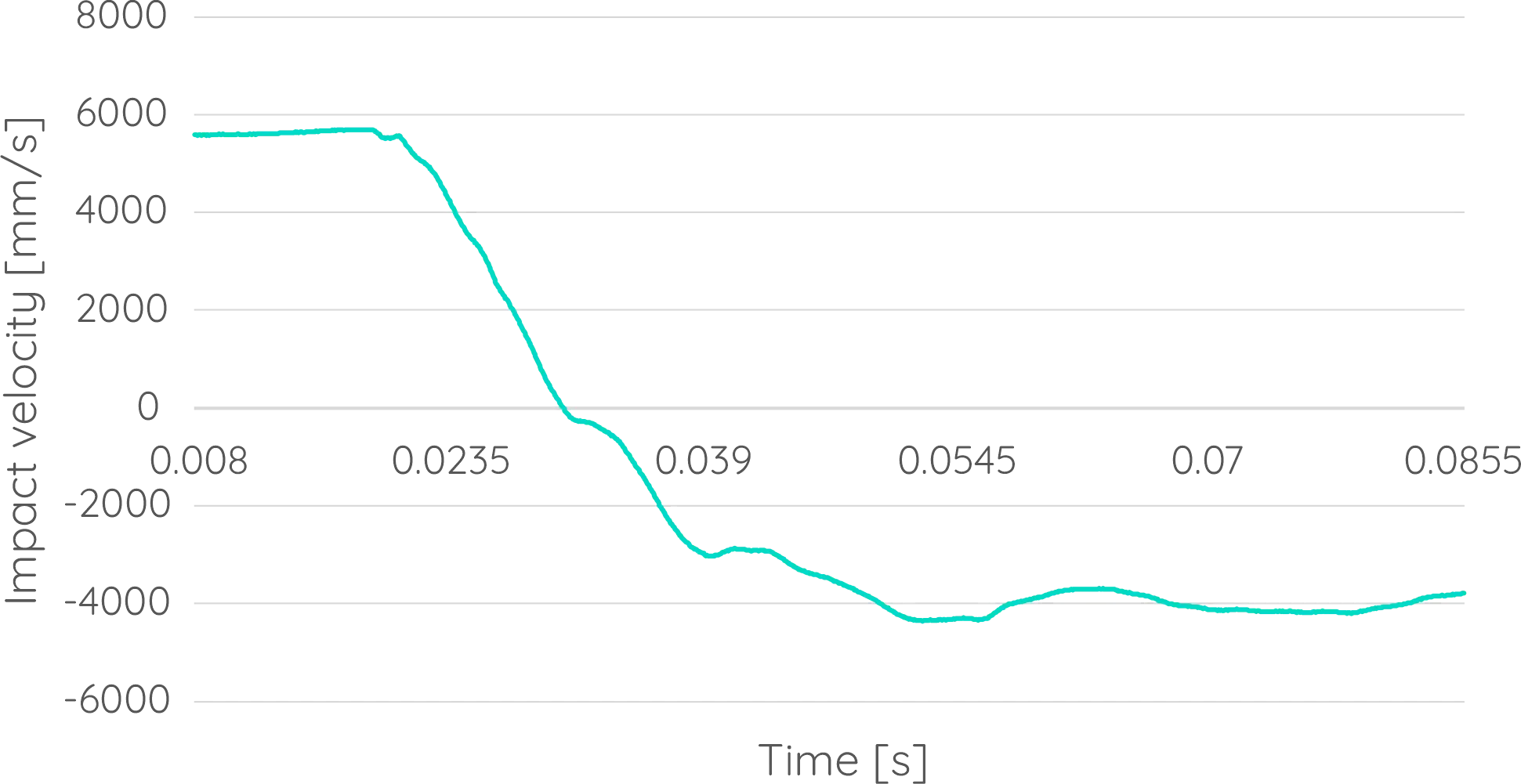
During the helmet drop test, it is essential to determine the impact velocity. Also, the behavior of the helmet after impact can be analyzed. Measuring the impact velocity using the DIC method is more convenient than numerical integration acceleration from accelerometers.
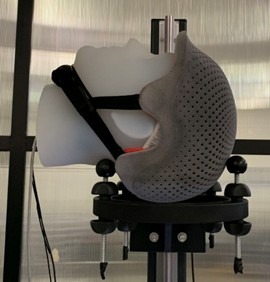
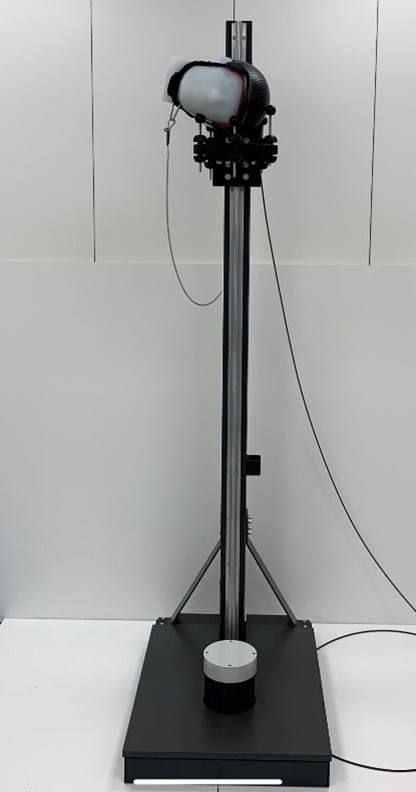
The experimental setup consists of a device that simulates the fall of a human head with a helmet from a height of two meters.
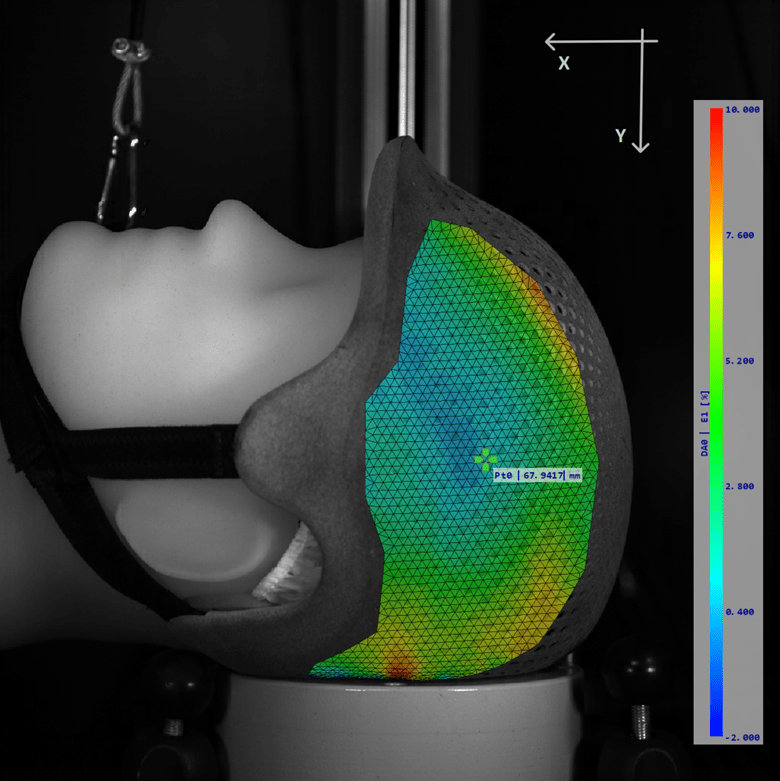
The high-speed camera records the helmet’s movement at the moment of impact. The movement of the point is analyzed, and velocity is obtained. However, the helmet is not rigid, so the strain field at the time of impact can be shown.
Thanks to the wide range of measuring tools, another quantity can be evaluated. From the analysis, it is possible to estimate the behavior of the helmet after bouncing off the ground. Also, C# scripting can be used to create customized solutions due to access to data files.
Before the test, the calibration of the system is necessary. The claibration grid is positioned in front of the camera, at the place where the impact occurs and then, the calibration is performed.
KEYWORDS
- Drop test
- Helmet
- High-speed
- Strain field
TEST SET-UP

OUTPUT
- Impact velocity
- Full field strain analysis
Measurement process and tools
Point probe Analysis
Movement tracking in specified direction (displacement, velocity, acceleration)
- The Euclidian displacement in the selected physical unit
- The directional displacement in the selected physical unit
- The Euclidian velocity or acceleration in the selected physical unit
Full-field Analysis (DIC Area)
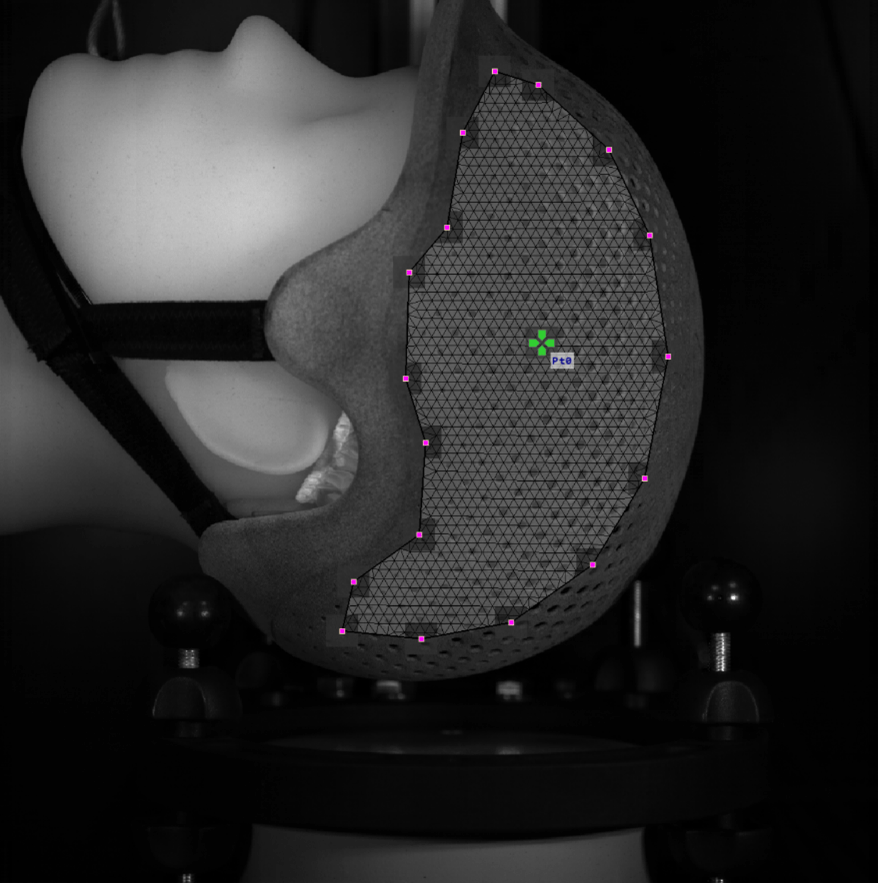
The DIC Area is a full-field probe providing a displacement or strain distribution map over user defined area. Free Edit option enables the customization of the shape and quality of the DIC area as shown in Figure 3.
Measurement evaluation
Measured velocity and strain distribution field at the moment of impact is evaluated. To determine the velocity is sufficient 2D system configuration. For more accurate analysis of strain distribution field, the 3D system configuration is recommended. Figure 4 captures the moment when the helmet’s velocity is zero, on the graph at the time 0.314 s.
 Download PDF version of this report here